
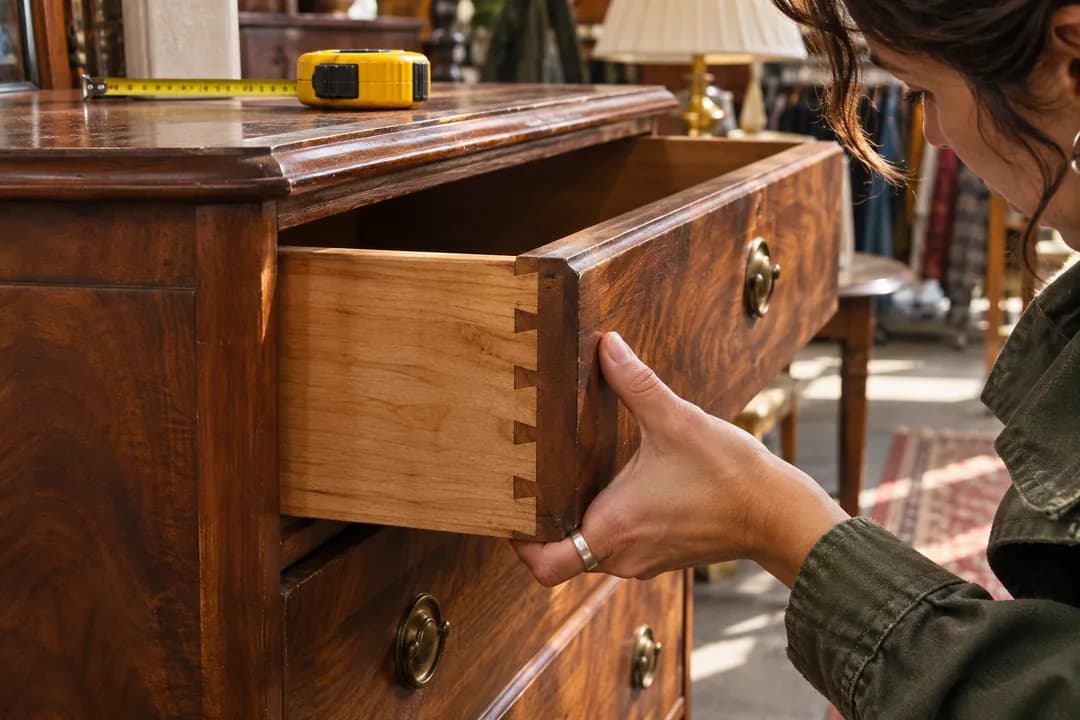
Measure your space and transport route
The most common used-furniture mistake is a piece that fits the room but not the door. Before you go, measure and write down, or keep on your phone:
- The spot where the piece will stand: width, depth and the height under windows or shelves.
- Every door, hallway, stair turn and elevator on the way in, at the narrowest point.
- The cargo space of the car or truck you’ll use, with the seats folded.
Take a tape measure to the store as well. Listed sizes on tags are rare, and a sofa that looks small in a big showroom can be huge in a living room. A photo of the room helps you judge color and style.
Check condition and construction
Used furniture is usually sold as it is, so check it carefully in the store:
Frame and joints
- Push on the piece from several sides. It shouldn’t wobble, creak or shift at the joints.
- Look at the back and underside: solid wood and plywood last longer than particleboard, which swells when wet and doesn’t hold screws well.
- Open every drawer and door. Drawers should run smoothly and close straight.
- Look for water stains, swollen edges, cracks and loose veneer.
Upholstery and cushions
- Smell it. Smoke, pet and mildew odors are hard to remove.
- Check seams, folds and the underside for stains, tears and small dark spots, which can be a sign of bed bugs.
- Sit on it. Cushions should spring back, and you shouldn’t feel the frame through the seat.
Ask about returns, holds and delivery
Policies differ a lot between stores, so ask at the register before you pay:
- Can you return or exchange it? Many secondhand stores sell furniture as final sale.
- How long will they hold a piece after you pay, and can they hold it before you pay while you arrange a truck?
- Do they deliver, at what cost, and how soon? Some stores deliver themselves, others work with a local service, many don’t deliver at all.
- Will staff help you load it?
Get the answers on the receipt or in writing if the piece stays in the store after you pay.
Plan collection and loading
Plan the trip home before you buy, especially for big pieces:
- Bring a second person. Store staff may not be allowed to carry furniture to your car.
- Pack moving blankets or old sheets, straps or rope, and work gloves.
- Ask if legs, shelves or drawers come out. Taking them out makes the piece lighter and safer to move.
- Pick a time with room to spare: pickup windows can be short, and stores often close the loading area before closing time.
Check current availability before traveling
Furniture moves fast in secondhand stores, and a piece you saw online or on a friend’s photo may be gone by the time you arrive. Call the store before a long drive to ask if it’s still there, and ask when new furniture usually comes out.
Find used furniture stores
Our used furniture page lists stores where furniture is documented for the store itself, by state and city: furniture thrift stores, furniture consignment shops, vintage home stores and Habitat for Humanity ReStores, which also sell building materials and appliances.
Many general thrift stores sell some furniture too. Find them on the map, or read thrift vs consignment vs resale to pick the right kind of store.