
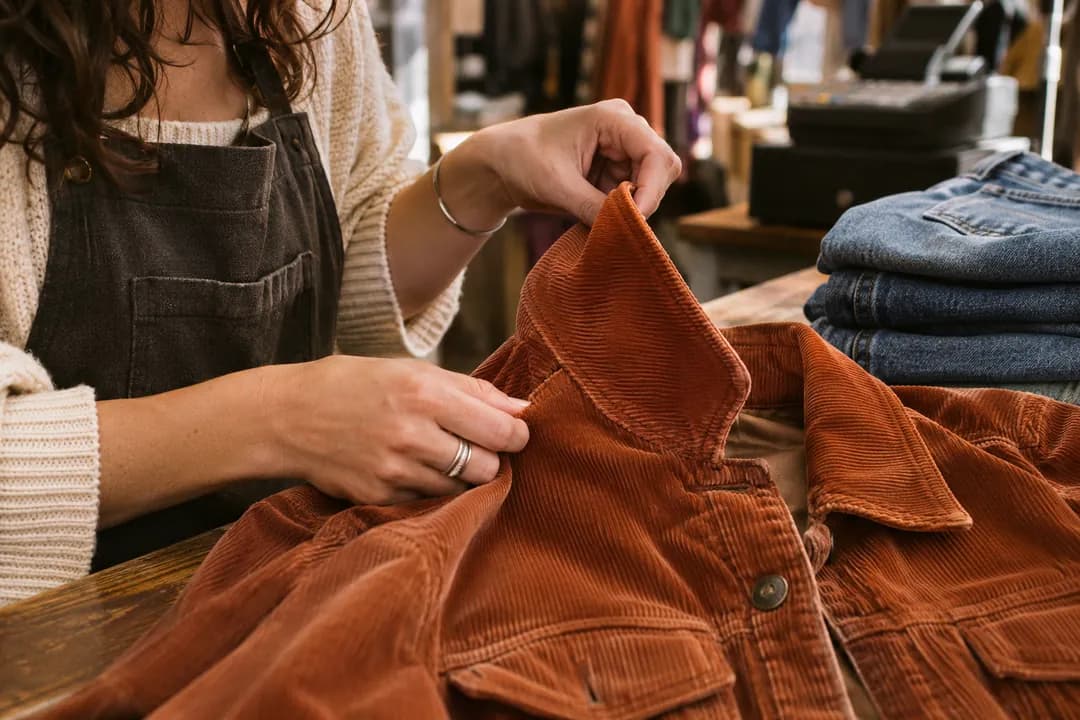
Choose between direct buyout and consignment
There are two ways a store can pay you for clothes:
A buyer looks through your items and makes an offer for the ones they want. You get paid the same visit and you’re done.
Best for: quick cash, everyday brands, clearing a closet.
The store prices and displays your items and pays you a share of the sale price after they sell. Unsold items come back to you or are handled as your agreement says.
Best for: designer and higher-priced pieces, when you can wait.
A buyout pays less per item, because the store takes the risk of not selling it. Consignment can pay more, but only for what actually sells, and only later.
Check what the store accepts
Resale stores only buy what they can sell again quickly in their own shop. Most have a clear focus, and that decides what they take far more than the brand on the label:
- Teen and young adult fashionPlato's Closet (597 stores), Uptown Cheapskate (190 stores)
- Women’s clothingClothes Mentor (175 stores), Style Encore (76 stores)
- Vintage and current trendsBuffalo Exchange (42 stores), Crossroads Trading (41 stores)
- Kids’ clothes, toys and baby gearOnce Upon A Child (465 stores), Kid to Kid (132 stores)
Before you go, check the store’s website or call and ask:
- Which sizes, styles and brands are they buying right now?
- Which season are they buying for? Many stores buy coats in fall and shorts in spring.
- Do they take shoes, bags, accessories or jewelry?
- Are there items they never take, like swimwear, intimates or stained pieces?
Independent resale and consignment shops are often more flexible than chains, but also more selective about brands.
Prepare and organize your items
A buyer decides in seconds per item. Make those seconds count:
- Wash everything and let it dry fully. Clothes that smell of smoke, pets or storage are usually turned down.
- Check for stains, holes, missing buttons, broken zippers and pilling in good light.
- Empty the pockets and remove pet hair and lint.
- Fold the clothes and bring them in a basket, box or bag you can take back home.
- Sort out what is clearly worn out before you go, and donate or recycle it instead.
Understand appointments, offers and payment
Many resale stores buy on a walk-in basis during set hours, while others ask you to book an appointment or join a waiting list. Buying often stops some time before the store closes, so go early in the day.
The buyer sorts your items into what they’ll take and what they won’t, then makes one offer for the whole lot. The offer reflects the price the store expects to sell each piece for, minus its costs and profit, so it is well below what you paid.
- Bring a photo ID. Many stores ask for one before they pay for items.
- Ask whether store credit pays more than cash. At some stores it does.
- For consignment, read the agreement: your share, how long items stay on sale, price drops and how you get paid.
- You can always decline an offer and take your clothes back.
What happens to items the store does not accept?
Expect the store to turn down part of what you bring. Those items are handed back to you. Some stores offer to donate what they don’t buy; you can say yes or take everything home.
For the rest you have three options:
- Try a second store with a different focus. What one buyer passes on may fit another store well.
- Consign the better pieces that a resale store wouldn’t buy outright.
- Donate the rest. Our guide on how to donate clothes explains what drop-offs accept.
Find stores that buy clothes
Switch the map to “Sell” with clothing to see stores that buy clothes or take them on consignment, nearest first. Each store’s page shows whether it buys, consigns or both, as far as our sources say, and its phone number to ask before you go.
Not sure which kind of store fits? Read thrift vs consignment vs resale.