
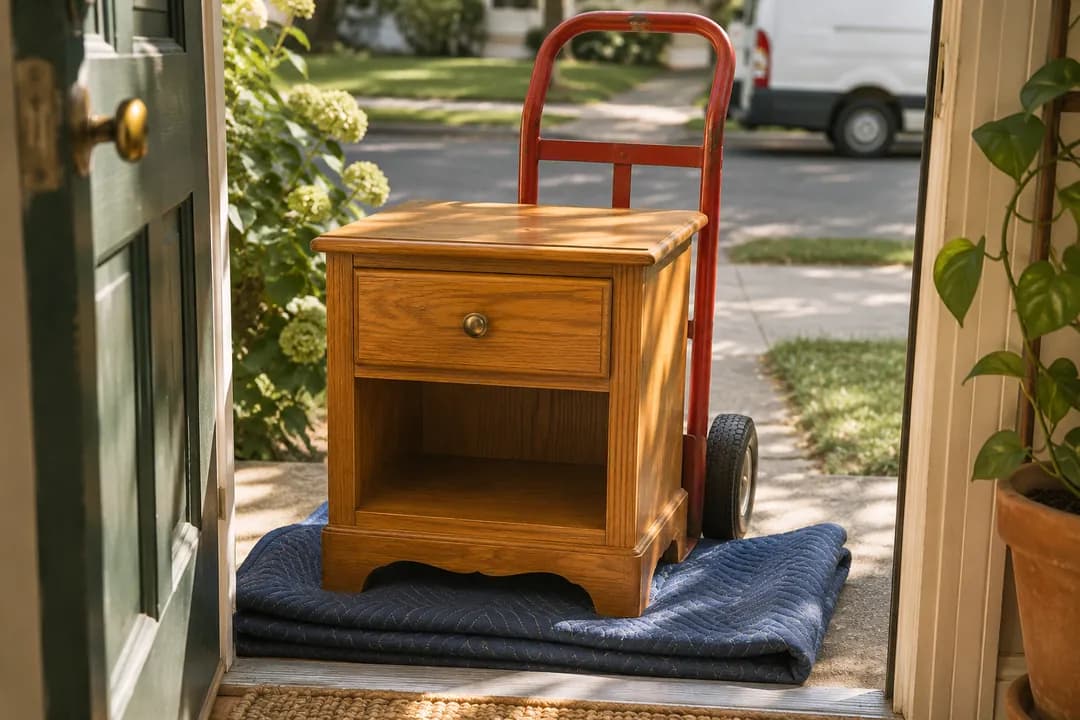
Check furniture types and condition requirements
Furniture takes space and staff time to move, so donation centers are pickier about it than about clothes. Most welcome sturdy, clean pieces that could go straight onto the sales floor: tables, chairs, dressers, bookcases, desks, cabinets and sofas in good shape.
Items that are often declined, though rules differ by organization:
- Mattresses and box springs. Many places don’t take them for hygiene reasons.
- Cribs, car seats and other baby gear with safety rules.
- Sofas and chairs with stains, tears, pet hair or smoke smell.
- Broken, wobbly or water-damaged pieces, and particleboard that has swollen or come apart.
- Very large items like sectional sofas or wall units, unless arranged in advance.
Send photos or measurements if requested
Many organizations ask for photos before they accept furniture, especially for pickups. Good photos save you a wasted trip or a turned-away truck:
- One photo of the whole piece in daylight, and close-ups of any wear or damage.
- For upholstery, the seat and the back, and the label if there is one.
- Width, depth and height, and whether it comes apart.
Arrange drop-off or pickup
You have two options, and not every organization offers both:
You bring the piece to a store or donation center during donation hours. Fastest, and staff can tell you on the spot whether they take it. You need a vehicle and help to unload.
A crew collects the furniture from your home. Offered by some charities and many ReStores, often only in part of their area and with a wait of days or weeks.
Organizations that take furniture at many locations include Goodwill (3,307 stores on our map), The Salvation Army (1,042 stores on our map), Habitat for Humanity ReStore (892 stores on our map), St. Vincent de Paul (396 stores on our map), Arc Thrift Stores (50 stores on our map), Deseret Industries (48 stores on our map). Whether a single branch takes furniture and offers pickup can differ, so check with that location.
Confirm fees, access and scheduling
Before the pickup day, confirm:
- Whether pickup is free or costs a fee, and how you pay.
- Where the crew collects: from inside your home, from the garage, or only at the curb.
- Stairs, elevators, narrow hallways and parking at your building. Some crews can’t carry items up or down several floors.
- The date and the time window, and how they let you know they’re on the way.
- What happens if the crew decides on site not to take a piece.
Prepare furniture for collection
- Empty every drawer, shelf and cabinet, and check under cushions.
- Wipe or vacuum the piece. Clean furniture is more likely to be accepted and sold.
- Tighten loose screws and knobs.
- If you take a piece apart, put screws and small parts in a bag and tape it to the furniture.
- Move it close to the door or the pickup spot before the crew arrives, if you safely can.
Find furniture donation locations
Switch the map to “Donate” with furniture to see ReStores and furniture thrift stores that take donations near you. Each store page lists the phone number to ask about furniture, pickup and donation hours.
A valuable piece might be worth consigning instead: see how consignment works. Buying rather than giving away? Read buying used furniture.