
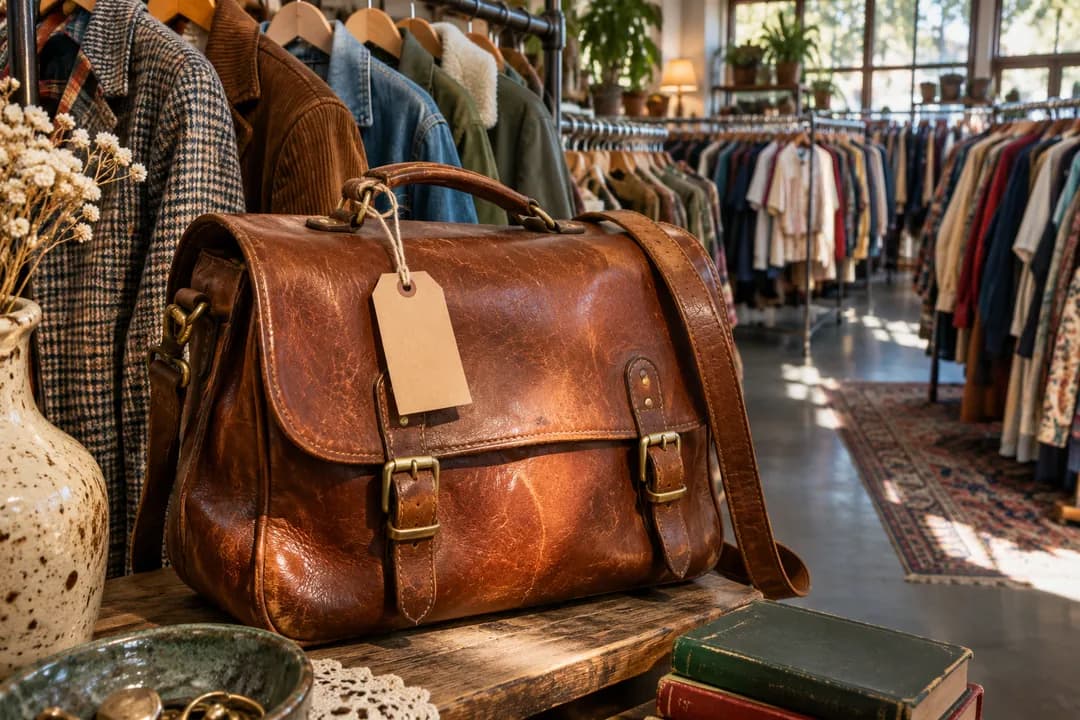
What is a thrift store?
A thrift store sells goods that people gave away: clothes, housewares, books, toys and often furniture. Because the goods are donated, prices are the lowest of the three, but stock is unsorted and changes every day. Thrift shopping rewards regular visits and some digging.
Many thrift stores are run by charities or nonprofits that use the money for their programs, like Goodwill, The Salvation Army or St. Vincent de Paul. Not all of them are, though: chains like Savers and Value Village are for-profit businesses. If it matters to you where the money goes, check who runs the store.
What is a resale store?
“Resale” is the broad word for any store that sells used goods. In everyday use, though, a resale store is one that buys items from the public: you bring in clothes, toys or gear, a buyer picks what fits their shelves, and you leave with cash or store credit the same day.
Because they choose what to buy, resale stores are tidier than thrift stores, sorted by size and style, and a bit more expensive. Many focus on one thing: teen and young adult fashion, women’s clothing, kids’ clothes and toys, sports gear or music instruments.
How consignment works
A consignment store sells your item for you. You bring it in, the store sets a price, and you get paid a share of that price only once it sells. If it doesn’t sell within the consignment period, you pick it up again, or the store may donate it or lower the price.
Consignment usually pays more than selling outright, because you share the final sale price instead of getting a quick offer, but you wait for the money. It works best for things that hold their value: designer clothing, furniture, home decor and higher-end kids’ gear.
Compare buying, selling and donating
The same task works differently in each kind of store:
- Buying
- Lowest prices, widest mix, more digging
- Selling your items
- No, they don’t pay for items
- Donating
- Yes, most take donations
- Buying
- Picked and sorted, a bit pricier
- Selling your items
- Cash or store credit on the spot
- Donating
- Usually no
- Buying
- Best condition, often brands or furniture
- Selling your items
- A share of the price once it sells
- Donating
- Usually no
Some stores mix models: a few thrift stores also consign furniture, and some resale shops take items on consignment that they don’t want to buy outright. A store’s page on our map shows what is known about it.
Which type of store should you choose?
If you want to buy
- Lowest price, time to browse: a thrift store.
- Your size and style, less digging: a resale store.
- Brands, designer pieces or good furniture: a consignment store.
- Furniture, cabinets or building supplies: a Habitat for Humanity ReStore or a used furniture store.
If you want to sell
- Money today: a resale store that buys outright.
- A better price and time to wait: consignment.
- Not worth selling: donate it to a thrift store instead.
More on selling in how to sell clothes to resale and consignment stores, and on giving things away in how to donate clothes.
Find the right store near you
The map shows every kind of store in its own color. Switch it to “Sell” to see only stores that buy or consign, or to “Donate” for places that take donations. For one kind of goods, start with a topic page:
- Used furniture stores: furniture thrift, consignment and ReStores
- Secondhand clothing stores: thrift, resale and consignment clothing
- Vintage stores: hand-picked older clothing and home goods
- Kids’ secondhand stores: clothes, toys and baby gear